
Ace:
A serve that is untouched by the opponent, winning the point immediately.
Around-the-Post (ATP):
A shot hit outside the net post, travelling parallel to the court to land in bounds on the opponent's side.
Backhand:
A stroke where the paddle moves across the body to hit the ball on the non-dominant side.
Backspin:
Also called “Slice” or “Chop”, applying spin to the ball by striking it with high to low motion, causing the ball to spin in the direction opposite its flight direction.
Baseline:
The boundary line at the back of the court.
Carry:
In pickleball, “carry” means you’re holding the ball on your paddle for too long instead of hitting it cleanly. You’re not supposed to scoop or push the ball - but contact it quickly with the paddle.
Cross Court:
In pickleball, “cross-court” means the court that is diagonally opposite to your court. Pickleball players must land their opening serve ‘cross-court’ from them.
Dead Ball:
A ball is declared after a fault; the point is over.
Dink:
A soft shot that clears the net and lands in the opponent's non-volley zone (kitchen), often used in strategic play.
Double Bounce Rule:
This rule states that the ball must bounce once on each side before players can volley it.
Double Hit:
A “double hit” is when one team hits the pickleball ball twice before it is returned over net. Double hits can be made by the same player, or include both players on a team.
Drive:
A fast, low shot hit with pace, often used to force an opponent into a defensive position.
Drop Shot:
A gentle shot aimed to land just over the net, making it challenging for the opponent to return.
Drop Shot Volley:
A “drop shot volley” is a drop shot that hits the ball straight out of the air (no ball bounce) and lands just across the net, making the opponent run forward to reach it.
Fault:
A violation of rules that results in the loss of a serve or a point.
First Serve:
In pickleball, the “first serve” is the very first serve your team gets when it’s your turn to serve. At the start of a game, and each time a team wins the serve back, only one player on that team gets to serve before the serve goes to the other team. That one chance is called the first serve.
Groundstroke:
A shot hit after the ball has bounced, as opposed to a volley.
Grip:
The grip area of the paddle–where a player holds it–affects both control and power in shots.
Half-Volley:
A “half volley” is when you hit the ball right after it bounces, before it has time to rise up. It’s kind of like scooping the ball just off the ground instead of letting it come up higher.
Hinder:
In pickleball, a “hinder” is anything that stops or distracts a player during a point. This could be something like a ball rolling onto the court, a person walking through the playing area, a loud or sudden distraction.
Kitchen:
Another name for the “Non-Volley Zone,” where players cannot hit a volley while standing inside it.
Let:
In pickleball, a “let” is the official call made when the play is interrupted by something outside the game (a distraction or a “hinder”) and the rally is stopped and replayed.
Line Call:
A “line call” in pickleball is the decision about whether the ball landed in or out of the court. If the ball touches any part of a line, it’s in. If it lands completely outside the lines, it’s out.
Lob:
A high, arcing shot intended to push opponents back toward the baseline.
Midcourt:
Refers to the region located between the baseline and the non-volley zone.
Momentum Rule:
This rule states that a player cannot step into the non-volley zone after hitting a volley, even if momentum carries them forward.
Non-Volley Zone (NVZ):
The area within 7 feet of the net on both sides, also known as the "Kitchen," prohibits volleying (hitting the ball before it bounces).
Overhead Smash:
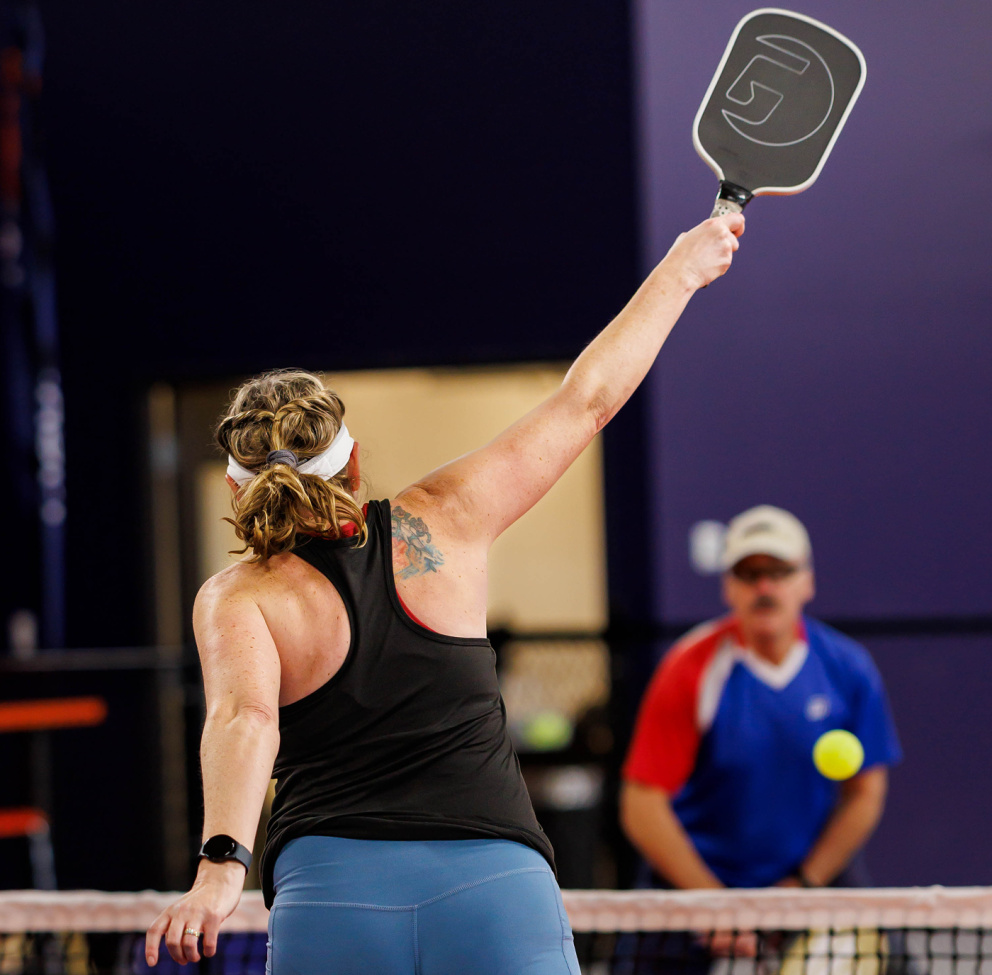
A powerful shot hit downward, usually off a high ball.
Paddle:
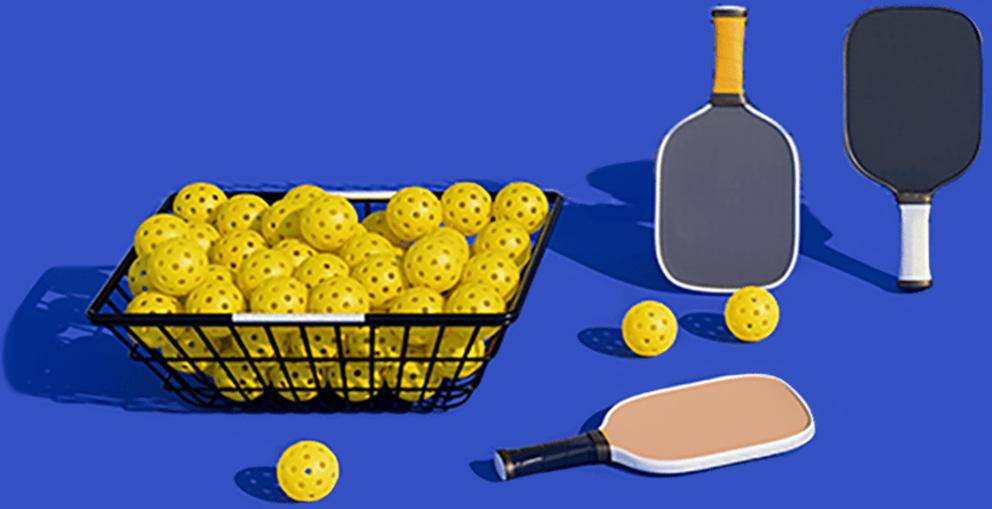
The equipment used to strike the ball is generally made of composite materials or wood.
Passing Shot:
A “passing shot” is a shot hit past your opponent, usually down the sideline or through the middle, before they can reach it.
Poach:
When a player crosses into their partner's territory to intercept a shot.
Rally:
A sequence of continuous play where the ball is hit back and forth. It starts when the serve is returned and ends when someone makes a fault, or the ball goes out.
Replays:
A “replay” is what happens after a “hinder” stops the play, and a “let” is officially called. In other words — you play the point over.
Reset Shot:
A soft, controlled shot to regain a neutral rally position and slow the opponent's attack.
Serve:
The shot that begins a point, hit underhand from behind the baseline.
Second Serve:
In pickleball, “the second serve” is the second chance to serve for a team during the same serving turn. In doubles, after the first server on a team loses the rally, the serve goes to their partner. That partner’s serve is called the second serve. When the second server loses the rally, the serve goes to the other team.
Service Court:
In pickleball, the “service court” is the box you must serve into. When you serve, the ball has to land diagonally across the net, past the kitchen line, and inside the sideline and baseline. That diagonal area is the service court.
Sideline:
The line at the side of the court.
Side Out:
Declared after one side loses its serve and service is awarded to the other team. In doubles, a side-out happens after both players on the serving team have had their turn to serve and both lose a rally.
Slice:
Another name for backspin.
Smash or Slam:
A hard, overhead shot.
Stacking:
A strategy where partners adjust their positions to maintain preferred court coverage after each serve or return.
Third Shot Drop:
A soft shot played after the serve and return, designed to land in the opponent's kitchen and set up a strategic rally.
Tweener:
A shot hit between a player's legs, often used as a last-resort defensive move.
Volley:
A shot hit before the ball bounces, usually taken near the net.
“Volley” vs “Half Volley”:
The difference is when you hit the ball:
- A volley is hit out of the air before the ball bounces.
- A half-volley is hit right after the ball bounces, before it rises much.
Memory tip:
Volley = no bounce
Half-volley = tiny bounce
“Drop Shot” vs “Drop Shot Volley”:
Here’s the simplest way to tell them apart:
- A drop shot is hit after the ball bounces.
- A drop shot volley is hit out of the air before the ball bounces.
Memory tip:
Both are soft shots meant to land near the net — the difference is when you hit the ball.
“Hinder” vs “Let” vs “Replay”:
Here’s the simplest way to separate the three:
- Hinder: Something interrupts or distracts play (like a stray ball, a person walking through, or a loud noise).
- Let: The call made to stop the point because of that interruption.
- Replay: What happens next — the point is played over.
Easy memory trick:
A hinder happens → you call a let → you do a replay.